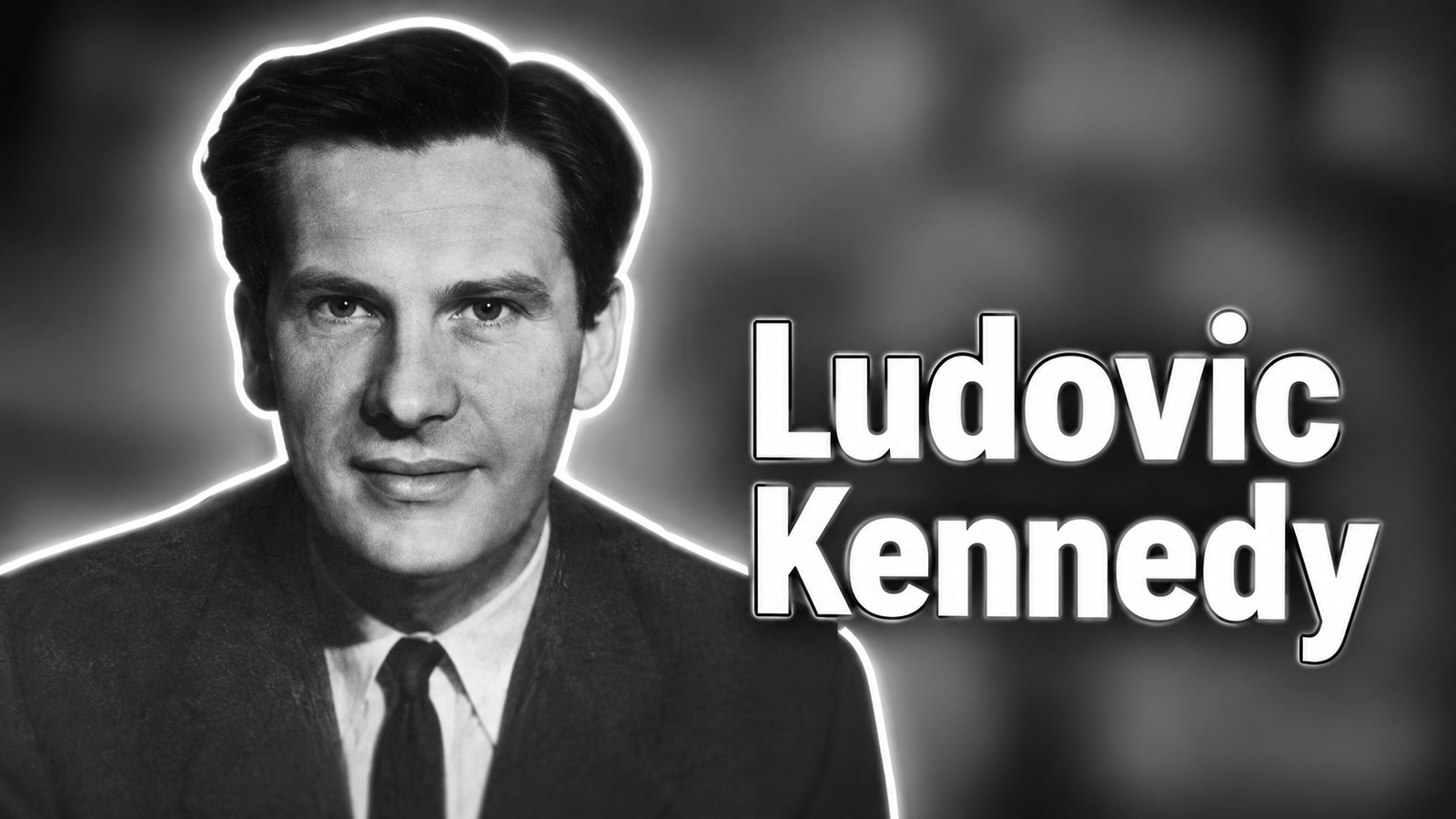
Ludovic Kennedy: Fearless Scottish Journalist, Broadcaster Who Transformed British Justice Forever
Powerful Legacy Through Truth, Courage, Integrity, Reform, Journalism, Justice, History

Introduction
Sir Ludovic Kennedy was one of Britain’s most respected investigative journalists, authors, and television broadcasters. Best known as a Scottish journalist and broadcaster, he built a remarkable reputation by uncovering facts, questioning controversial criminal convictions, and encouraging public debate about justice. His work influenced journalism for decades and earned him recognition as one of the country’s leading voices in investigative reporting.
Table of Contents
ToggleThroughout his career, Ludovic Kennedy combined determination with careful research to produce books, television programs, and public campaigns that challenged accepted opinions. While many admired his fearless reporting, others criticized his controversial views on legal reform and assisted dying. Even so, his lasting contribution to journalism and public life remains widely respected.
Quick Bio
| Field | Details |
|---|---|
| Full Name | Sir Ludovic Henry Coverley Kennedy |
| Known As | Ludovic Kennedy |
| Birth Date | 3 November 1919 |
| Birthplace | Edinburgh, Scotland |
| Nationality | British |
| Profession | Scottish journalist, broadcaster, author |
| Education | Eton College; Christ Church, Oxford |
| Military Service | Royal Navy (World War II) |
| Spouse | Moira Shearer |
| Children | One son and three daughters |
| Famous For | Investigative journalism, BBC broadcasting, books on criminal justice |
| Honors | Knight Bachelor (1994) |
| Death | 18 October 2009, Salisbury, Wiltshire, England |
Early Life and Family Background
Ludovic Kennedy was born on 3 November 1919 in Edinburgh, Scotland, into a respected family with strong naval traditions. His father, Captain Edward Kennedy, served in the Royal Navy and was killed during the Second World War. This tragic family loss had a lasting influence on Kennedy’s outlook and later inspired some of his historical writing.
Growing up in Scotland, Kennedy developed an early interest in reading, history, and public affairs. His family valued education and service, encouraging him to pursue knowledge while maintaining strong personal principles. These early experiences shaped the determined character that later defined his journalism career.
Education
Kennedy received his early education at the prestigious Eton College, where he developed excellent writing and communication skills. His academic ability later earned him admission to Christ Church, Oxford, where he studied English.
The outbreak of World War II interrupted his university education. After completing military service, he returned to Oxford to finish his studies. His educational background strengthened his analytical thinking and prepared him for a successful career in journalism and broadcasting.
Military Service During World War II
Before becoming a well-known broadcaster, Ludovic Kennedy served in the Royal Navy during World War II. He worked as a naval officer aboard HMS Tartar and participated in important wartime operations.
One of the most significant moments of his military service was taking part in the pursuit of the German battleship Bismarck. His first-hand experience of naval warfare later became the foundation for several respected historical books.
Career as a Scottish Journalist and Broadcaster
After the war, Kennedy began working as a journalist before moving into television broadcasting. His ability to explain complicated issues clearly and confidently helped him become one of Britain’s most respected television personalities.
As a Scottish journalist and broadcaster, he worked with ITN before joining the BBC. His role as a presenter on Panorama introduced him to millions of viewers, who appreciated his thoughtful interviews and commitment to factual reporting.
Investigative Journalism That Changed Public Opinion
Ludovic Kennedy became famous for investigating controversial criminal cases that many believed had resulted in wrongful convictions. Instead of accepting official conclusions, he carefully examined evidence and presented alternative viewpoints based on detailed research.
His investigations encouraged fresh public discussions about justice and legal reform. Several of his books became highly influential because they highlighted weaknesses in the criminal justice system while encouraging greater fairness and transparency.
Books and Writing Career
Alongside his broadcasting career, Kennedy became a respected author. His books covered naval history, famous criminal investigations, politics, and public affairs, earning praise for their clear writing and detailed research.
Some of his best-known works include Ten Rillington Place, Pursuit, The Trial of Stephen Ward, The Airman and the Carpenter, Sub-Lieutenant, and Nelson’s Band of Brothers. These publications strengthened his reputation as both a skilled historian and investigative writer.
Public Campaigns and Personal Beliefs
Kennedy believed that journalism should encourage fairness and accountability. Throughout his life, he campaigned against capital punishment and supported reforms that aimed to reduce miscarriages of justice.
He also became a well-known advocate for assisted dying and humanist values. Although some of his opinions generated public debate, he consistently defended his beliefs through reasoned discussion rather than sensationalism.
Marriage and Personal Life
In 1950, Ludovic Kennedy married the celebrated Scottish ballerina and actress Moira Shearer. Their marriage lasted for more than five decades and remained one of the most stable relationships in British public life.
Together they raised one son and three daughters while balancing demanding professional careers. Kennedy generally kept his family life private, preferring public attention to remain focused on his professional work rather than his personal affairs.
Career Timeline
Early Career
- 1919: Born in Edinburgh, Scotland.
- 1930s: Educated at Eton College.
- Late 1930s: Began studying at Christ Church, Oxford.
Professional Journey
- 1939–1945: Served in the Royal Navy during World War II.
- Late 1940s: Completed studies at Oxford.
- 1950s: Started career in journalism and television broadcasting.
- 1960s: Became a leading presenter on BBC Panorama.
- 1961: Published Ten Rillington Place.
- 1974: Published Pursuit.
- 1985: Published The Airman and the Carpenter.
- 1994: Knighted for services to journalism.
- 2009: Passed away at the age of 89.
Awards and Recognition
Kennedy’s contribution to journalism was widely acknowledged throughout his career. In 1994, he received a knighthood for his outstanding services to journalism, recognizing decades of professional excellence.
His books, documentaries, and investigative reporting continue to be studied by journalism students and historians. Many regard him as one of Britain’s most influential investigative journalists of the twentieth century.
Legacy and Lasting Influence
Ludovic Kennedy left behind an extraordinary legacy built on honesty, courage, and intellectual curiosity. His investigations encouraged greater public awareness of legal errors and demonstrated how responsible journalism could contribute to meaningful social change.
Although some of his campaigns remained controversial, his commitment to truth and fairness continues to inspire journalists around the world. His career proves that careful research, balanced reporting, and personal integrity can have a lasting impact on society.
Conclusion
Ludovic Kennedy remains an outstanding example of a Scottish journalist, broadcaster, and author whose dedication to truth shaped modern investigative journalism. His achievements extended beyond television, influencing legal debates, historical research, and public understanding of justice through thoughtful reporting and powerful writing.
His life demonstrates both the positive influence and the difficult challenges faced by investigative journalists. Through courage, professionalism, and unwavering commitment to facts, Sir Ludovic Kennedy earned a respected place in British history and continues to inspire future generations of writers, broadcasters, and researchers.
FAQ
1. Who was Ludovic Kennedy?
Ludovic Kennedy was a British Scottish journalist, broadcaster, author, and investigative reporter.
2. When was Ludovic Kennedy born?
He was born on 3 November 1919.
3. Where was Ludovic Kennedy born?
He was born in Edinburgh, Scotland.
4. Who was Ludovic Kennedy’s wife?
He was married to Scottish ballerina and actress Moira Shearer.
5. Did Ludovic Kennedy have children?
Yes, he had one son and three daughters.
6. What was Ludovic Kennedy famous for?
He was famous for investigative journalism, broadcasting, and writing books about criminal justice.
7. Did Ludovic Kennedy serve in the military?
Yes, he served in the Royal Navy during World War II.
8. What television programme did Ludovic Kennedy present?
He became widely known as a presenter of BBC Panorama.
9. What honor did Ludovic Kennedy receive?
He was knighted in 1994 for services to journalism.
10. When did Ludovic Kennedy die?
He died on 18 October 2009 at the age of 89.