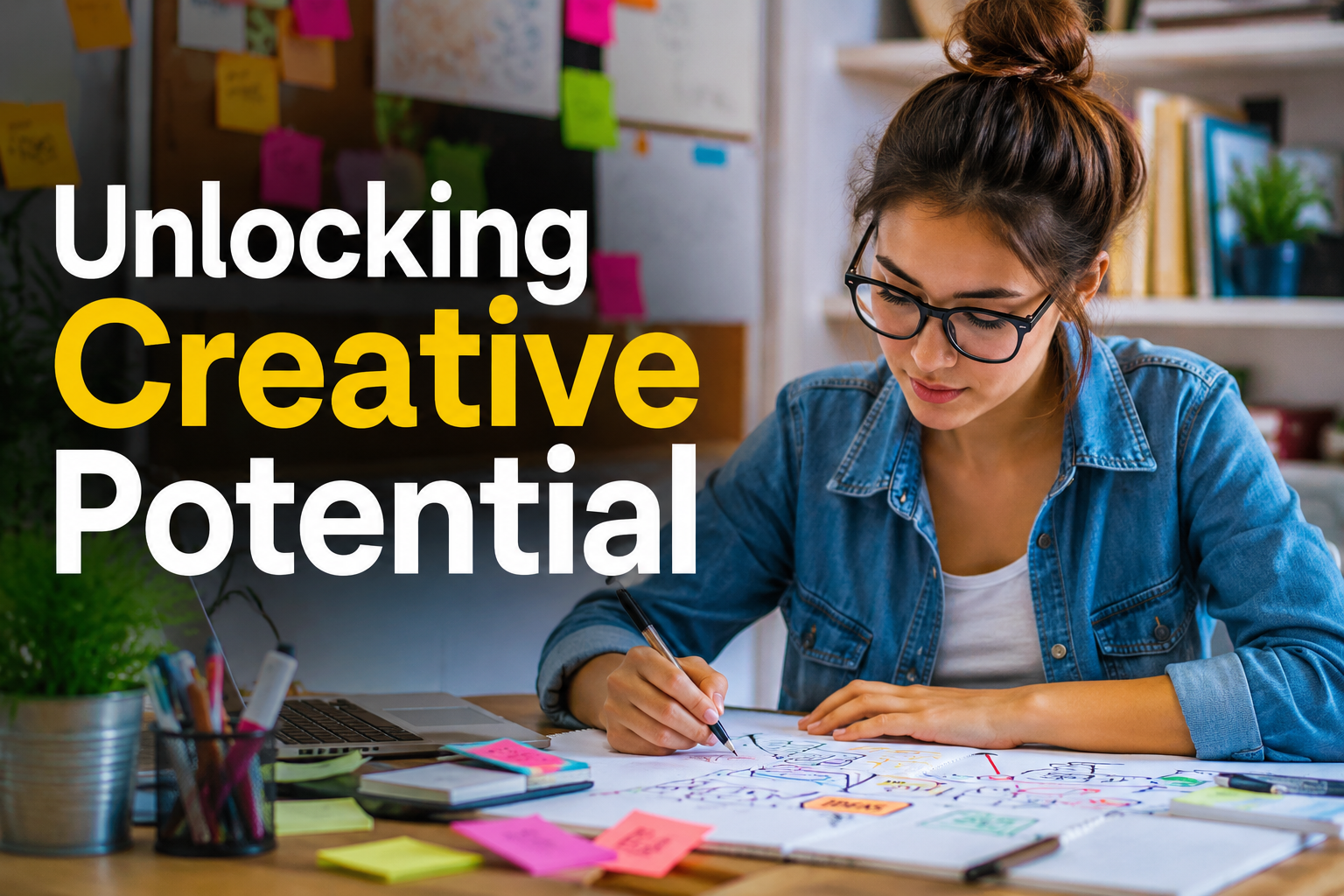
Unlocking Creative Potential: Transform Ideas Into Meaningful Results
Discover fresh ideas, overcome creative blocks, and turn imagination into meaningful results.

Introduction
Unlocking Creative Potential is about discovering new ways to think, solve problems, and turn ideas into practical outcomes. Creativity is not limited to artists, designers, writers, or musicians. It plays an important role in business, technology, education, marketing, and everyday life.
Table of Contents
ToggleIn a rapidly changing world, the ability to generate fresh ideas can become a valuable advantage. Whether you want to develop a new project, improve your professional skills, or simply find better solutions to everyday challenges, unlocking your creative potential can help you move forward with greater confidence.
What Does Unlocking Creative Potential Mean?
Unlocking creative potential means creating the right conditions for ideas to develop. Everyone has the ability to think creatively, but stress, fear of failure, routine, and excessive self-criticism can make creativity difficult to access.
Creative thinking involves looking beyond obvious answers. It encourages people to ask different questions, explore alternatives, experiment with new approaches, and learn from mistakes.
The goal is not to produce a perfect idea immediately. Instead, it is to create an environment where ideas can grow and improve over time.
Why Creativity Matters Today
Modern workplaces and digital environments are constantly changing. Businesses need innovative solutions, creators need fresh concepts, and professionals need to adapt to new challenges.
Creativity can help with:
- Solving complex problems
- Developing innovative products
- Creating engaging content
- Improving communication
- Finding new business opportunities
- Making better decisions
- Adapting to change
- Building stronger personal skills
People who develop creative thinking can often approach familiar challenges from new perspectives.
How to Unlock Your Creative Potential
Give Yourself Time to Think
Creativity needs space. Constant notifications, meetings, and distractions can make it difficult to concentrate on new ideas.
Set aside dedicated time for brainstorming, writing, sketching, researching, or simply thinking. Even a short period of uninterrupted focus can help generate useful ideas.
Stay Curious
Curiosity is one of the strongest foundations of creativity. Ask questions about how things work and why they are done in a particular way.
Explore subjects outside your normal interests. Reading about science, business, history, technology, art, or culture can expose you to ideas that may later inspire your own work.
Accept Imperfect Ideas
One common barrier to creativity is expecting every idea to be excellent from the beginning.
Instead, write down your ideas without immediately judging them. Some may seem weak at first but can become valuable after refinement. Creativity often develops through experimentation rather than instant perfection.
Change Your Environment
A new environment can introduce different sensory experiences and perspectives. Working from another room, taking a walk, visiting a new place, or spending time outdoors may help break repetitive thinking patterns.
Even small environmental changes can encourage the brain to consider new possibilities.
Practice Brainstorming
Brainstorming is a simple technique for producing multiple possibilities before choosing the strongest one.
Start with a problem or goal and write down as many ideas as possible. Avoid judging them during the first stage. Once you have a collection of ideas, review them and identify the most practical or interesting options.
Learn From Other People
Collaboration can significantly expand creative thinking. Different people bring different experiences, knowledge, and perspectives to the same problem.
Discuss your ideas with colleagues, friends, mentors, or creative communities. A simple conversation can reveal an approach you may not have considered yourself.
Creativity and Technology
Technology has created new opportunities for creative expression. Digital design tools, editing platforms, collaboration software, and artificial intelligence can help people experiment faster and transform concepts into finished projects.
However, technology should support creativity rather than replace original thinking. The strongest results often come from combining human imagination with useful digital tools.
For example, a creator might use technology to organize research, test concepts, improve visuals, or automate repetitive tasks while keeping the central creative direction personal.
Overcoming Creative Blocks
Creative blocks happen to almost everyone. They may occur when someone feels exhausted, pressured, distracted, or afraid of producing poor work.
When you experience a creative block, try changing your approach. Take a short break, switch tasks, write freely, discuss the problem with someone, or return to the project with a fresh perspective.
Another useful technique is to divide a large project into smaller tasks. Completing one manageable step can restore momentum and make the overall challenge feel less overwhelming.
Building a Creative Routine
Creativity becomes easier to develop when it becomes part of your regular routine. You do not need to spend hours every day on creative exercises.
Consider simple habits such as:
- Keeping an idea notebook
- Reading regularly
- Learning a new skill
- Writing down questions
- Photographing interesting subjects
- Trying unfamiliar activities
- Reviewing completed projects
- Setting aside distraction-free thinking time
Over time, these habits can strengthen your ability to notice opportunities and develop original ideas.
The Role of Failure in Creativity
Failure is often part of the creative process. An unsuccessful experiment can provide information about what does not work and help guide the next attempt.
Instead of treating mistakes as proof that an idea is bad, consider them feedback. Experimentation becomes more productive when people are willing to test ideas, evaluate results, and make improvements.
This mindset can make creativity less intimidating and more practical.
Unlocking Creative Potential in Business
Businesses can benefit greatly from creative thinking. New ideas can improve customer experiences, marketing campaigns, products, services, and internal processes.
Companies can encourage creativity by giving employees opportunities to share ideas, experiment with new approaches, and collaborate across different departments.
A workplace that welcomes thoughtful experimentation can create an environment where innovation becomes part of everyday operations.
Conclusion
Unlocking Creative Potential is a continuous process rather than a one-time achievement. Creativity grows through curiosity, practice, experimentation, collaboration, and a willingness to learn from mistakes.
You do not have to wait for inspiration to appear. By creating time to think, exploring different perspectives, developing useful habits, and allowing yourself to experiment, you can gradually strengthen your creative abilities.
Whether your goal is professional growth, entrepreneurship, content creation, problem-solving, or personal development, creativity can help you turn possibilities into meaningful results.