Digital Marketing Services for Different Industries: A Complete Guide
Industry-Specific Digital Strategies That Drive Visibility, Leads, and Growth

Introduction
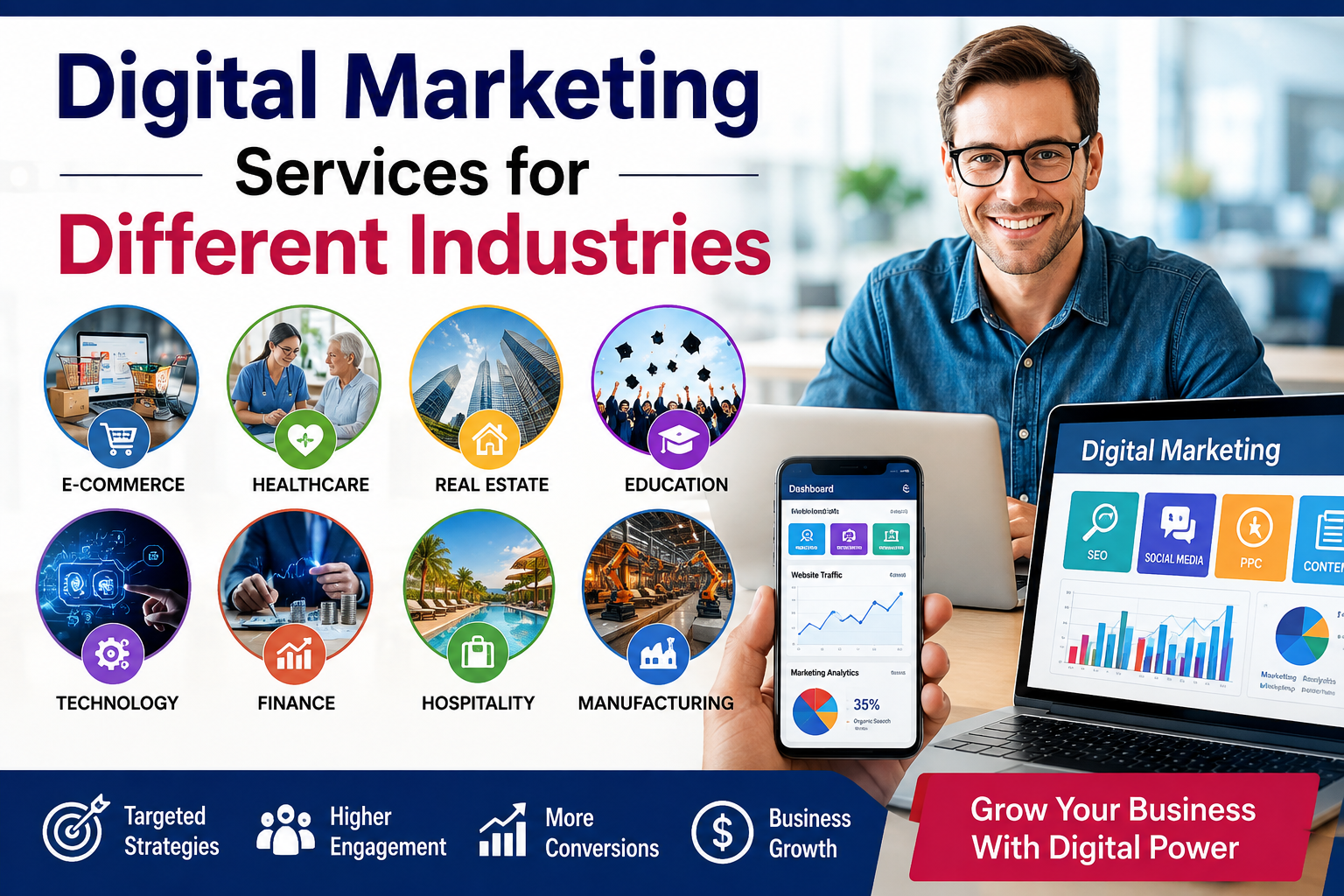
Digital marketing has become an essential part of modern business growth. Whether a company operates in healthcare, retail, education, technology, real estate, hospitality, or another sector, having a strong online presence can help attract customers and build long-term brand awareness. However, every industry has different customers, goals, challenges, and purchasing behaviors.
Digital Marketing Services for Different Industries focus on creating customized strategies that match the needs of individual businesses. Instead of using one general marketing approach, businesses can use industry-specific SEO, social media marketing, content creation, paid advertising, email campaigns, and other digital solutions to reach the right audience.
This guide explains how digital marketing services can support different industries and why customized strategies are important for sustainable online growth.
What Are Digital Marketing Services?
Digital marketing services include a wide range of online marketing solutions designed to improve visibility, attract potential customers, and increase conversions. These services can be adapted according to a company’s industry, target audience, location, and business objectives.
Common digital marketing services include:
- Search engine optimization (SEO)
- Local SEO
- Social media marketing
- Content marketing
- Pay-per-click advertising
- Email marketing
- Website optimization
- Online reputation management
- Video marketing
- Analytics and performance tracking
A successful strategy combines the right services rather than applying every marketing technique at once.
Why Different Industries Need Different Strategies
A marketing campaign that works well for an online clothing store may not work for a law firm or healthcare provider. Customers search for information differently depending on what they need.
For example, a restaurant may benefit from local search visibility and social media images, while a software company may need technical content, product demonstrations, and search campaigns.
Industry-specific digital marketing considers factors such as:
- Customer expectations
- Buying behavior
- Competition
- Industry regulations
- Average sales cycle
- Search intent
- Geographic location
- Business goals
This approach makes marketing more relevant and can help businesses use their budgets more effectively.
Digital Marketing for Retail and E-Commerce
Retail and e-commerce businesses depend heavily on online visibility. Customers often search for products, compare prices, read reviews, and check product details before making a purchase.
Digital marketing for retail can include product-focused SEO, shopping campaigns, social media advertising, email marketing, and content creation.
Important strategies include:
Product SEO
Optimized product titles, descriptions, categories, images, and structured information can help search engines understand online stores and their products.
Social Media Marketing
Platforms such as Instagram, Facebook, TikTok, and Pinterest can help retailers showcase products and engage potential buyers.
Email Marketing
Retailers can use email campaigns to announce new products, promotions, seasonal offers, and personalized recommendations.
Digital Marketing for Healthcare
Healthcare organizations need to build trust while making useful information easy to find. Patients frequently search online for healthcare providers, services, locations, and general health information.
Digital marketing for healthcare may include:
- Local SEO
- Informative website content
- Search optimization
- Reputation management
- Appointment-focused landing pages
- Educational videos
- Social media communication
Healthcare marketing should prioritize accurate, trustworthy, and responsible information.
Digital Marketing for Real Estate
Real estate businesses compete for buyers, sellers, renters, and investors. Strong online marketing can help agents and property companies showcase listings and generate qualified leads.
Real estate marketing strategies can include:
- Local SEO
- Property listing optimization
- Neighborhood guides
- Social media marketing
- Video tours
- Search advertising
- Lead-generation landing pages
High-quality images and videos are especially valuable because prospective clients often want to explore properties before arranging a viewing.
Digital Marketing for Education
Schools, colleges, universities, training centers, and online learning platforms can use digital marketing to reach students and their families.
Useful strategies include educational blog content, SEO, social media campaigns, email marketing, webinars, and paid search advertising.
Content can answer questions about:
- Courses
- Admission requirements
- Fees
- Career opportunities
- Learning formats
- Scholarships
- Campus facilities
Helpful educational content can attract people earlier in the decision-making process.
Digital Marketing for Technology Companies
Technology companies often sell complex products or services that require explanation before customers make a purchase.
Digital marketing for technology businesses can focus on:
- Technical SEO
- Thought leadership
- Product guides
- Case studies
- Demonstration videos
- Webinars
- Search advertising
- B2B lead generation
Clear content can simplify technical subjects and demonstrate how a product solves a customer’s problem.
Digital Marketing for Financial Services
Banks, financial companies, insurance providers, and accounting businesses operate in competitive markets where trust is extremely important.
Their digital strategies may include SEO, educational content, local search optimization, reputation management, email marketing, and carefully targeted advertising.
Financial content should be accurate and transparent. Businesses should also consider applicable advertising and regulatory requirements when creating campaigns.
Digital Marketing for Hospitality and Travel
Hotels, resorts, travel agencies, tour operators, and restaurants can use digital marketing to inspire customers and increase bookings.
Visual content is particularly useful in this industry. Businesses can showcase destinations, rooms, food, activities, customer experiences, and special offers.
Effective strategies include:
- Local SEO
- Destination content
- Social media marketing
- Online reviews
- Video marketing
- Email promotions
- Booking-focused landing pages
A strong local presence can be especially valuable for businesses that depend on travelers or nearby customers.
Digital Marketing for Professional Services
Law firms, consulting companies, marketing agencies, accountants, and other professional service providers often need to demonstrate expertise before a potential client makes contact.
Content marketing can help answer common customer questions and establish authority.
Useful strategies include:
- Service-page SEO
- Local SEO
- Educational articles
- Case studies
- Client testimonials
- LinkedIn marketing
- Lead-generation campaigns
The goal is not simply to generate website traffic but to attract visitors who are genuinely interested in the company’s services.
Digital Marketing for Manufacturing and B2B Companies
Manufacturing companies often have longer sales cycles and specialized products. Their customers may include distributors, procurement teams, engineers, and business owners.
B2B digital marketing can include:
- Technical SEO
- Product documentation
- Industry-specific content
- LinkedIn marketing
- Case studies
- Email campaigns
- Lead-generation forms
- Search advertising
Detailed content can help potential customers understand products and evaluate suppliers before contacting a sales team.
The Role of SEO Across Industries
SEO remains an important component of digital marketing because people frequently use search engines to discover products, services, companies, and information.
An industry-specific SEO strategy may include:
- Keyword research
- Search-intent analysis
- Competitor research
- On-page optimization
- Technical SEO
- Local SEO
- Content development
- Internal linking
- Authority building
- Performance monitoring
The most valuable keywords are not always the ones with the highest search volume. Businesses should also consider relevance, competition, search intent, and potential business value.
Social Media Marketing for Different Audiences
Social media can help businesses build awareness and communicate directly with customers. However, each industry should select platforms and content formats based on its audience.
For example, a fashion brand may focus heavily on visual platforms, while a B2B technology company may prioritize professional networks and educational content.
Effective social media campaigns can include:
- Short-form videos
- Educational posts
- Product demonstrations
- Customer stories
- Industry news
- Behind-the-scenes content
- Promotional campaigns
Consistency is important, but quality and relevance matter more than simply publishing frequently.
Measuring Digital Marketing Performance
A professional digital marketing strategy should be measurable. Businesses can monitor key performance indicators such as:
- Website traffic
- Organic search traffic
- Keyword rankings
- Leads
- Conversion rates
- Cost per lead
- Advertising return
- Engagement
- Email performance
- Online sales
Regular analysis helps businesses identify what is working and where improvements are needed.
How to Choose the Right Digital Marketing Services
Businesses should begin by identifying their goals. A company focused on local customers may need local SEO, while an international e-commerce business may require technical SEO, content marketing, and paid advertising.
Before selecting services, consider:
- Target audience
- Marketing budget
- Business objectives
- Competition
- Geographic market
- Sales cycle
- Existing online presence
- Available internal resources
A customized strategy can prevent businesses from spending money on marketing channels that do not support their objectives.
Conclusion
Digital Marketing Services for Different Industries provide businesses with flexible ways to reach their specific audiences online. Retail companies, healthcare providers, real estate businesses, educational institutions, technology firms, financial organizations, hospitality brands, professional services, and manufacturers all have different marketing requirements.
The strongest digital marketing strategy is not simply about using more channels. It is about choosing the right channels, creating useful content, understanding customer behavior, and continuously measuring performance.
As online competition continues to grow, industry-specific digital marketing can help businesses strengthen visibility, attract qualified prospects, build trust, and create sustainable opportunities for growth.