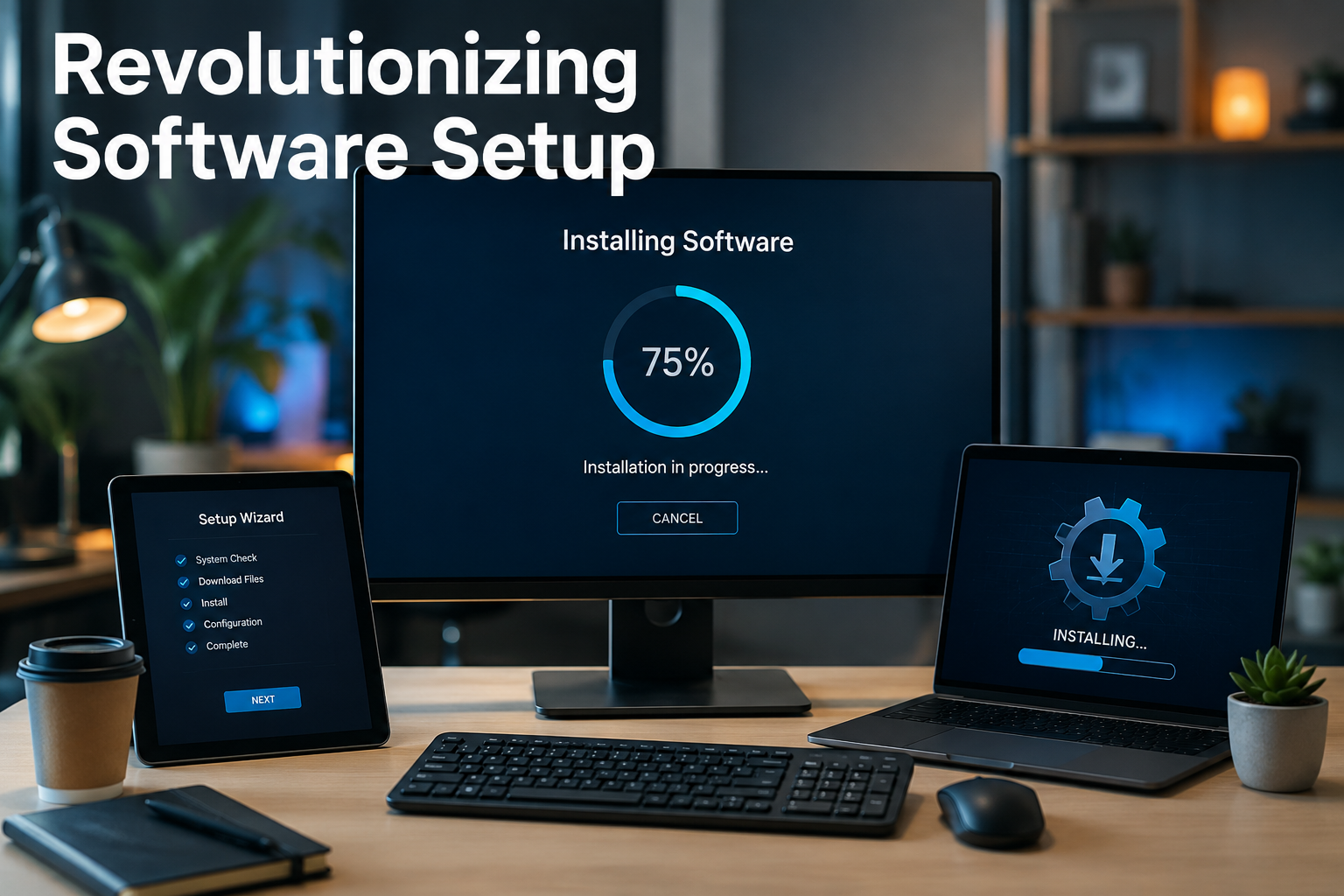
Revolutionizing Software Setup: Smarter Ways to Install and Manage Applications
Transforming Software Installation with Smarter Automation, Seamless Deployment, and Modern Technology

Introduction
Software setup has traditionally involved downloading files, following installation steps, configuring settings, and troubleshooting unexpected errors. As applications become more sophisticated and businesses rely on larger technology ecosystems, traditional installation methods can become time-consuming and difficult to manage.
Revolutionizing Software Setup represents a shift toward faster, smarter, and more automated installation processes. Modern setup solutions can simplify deployment, reduce configuration mistakes, improve security, and help users get applications running with less technical effort.
What Is Revolutionizing Software Setup?
Revolutionizing Software Setup refers to the use of modern technologies and automated processes to improve how software is installed, configured, updated, and maintained.
Instead of requiring users or IT teams to complete every step manually, modern software setup can use automated configuration, intelligent installation assistants, cloud-based deployment, package management, and centralized administration.
This approach benefits both individual users and organizations because it makes software deployment more consistent and efficient.
Why Traditional Software Installation Can Be Challenging
Conventional software installation often creates several challenges. Users may need to select installation folders, configure permissions, install dependencies, activate licenses, and adjust application settings.
For businesses, these challenges become even more significant when software must be deployed across dozens or thousands of computers.
Common problems include:
- Incomplete installations
- Incorrect configuration
- Compatibility issues
- Missing dependencies
- Security risks
- Repetitive manual tasks
- Difficult software updates
- Increased IT support requirements
Modern setup technologies aim to solve many of these problems through automation and centralized management.
Automation Is Changing Software Deployment
Automation is one of the most important elements of modern software setup. Automated installers can detect system requirements, download necessary components, configure applications, and complete repetitive tasks with minimal user interaction.
For organizations, automated deployment can also allow IT teams to distribute approved applications across multiple devices simultaneously. This saves time and creates a more consistent software environment.
Automation can also reduce human error because predefined configurations are applied consistently instead of being manually entered on every machine.
Cloud-Based Software Setup
Cloud technology has transformed how applications are delivered and configured. Many modern platforms allow users to access software through online accounts instead of relying entirely on traditional installation packages.
Cloud-based setup can provide centralized configuration, automatic updates, remote administration, and easier access across multiple devices.
For businesses with remote or hybrid teams, this approach can make software management considerably more flexible.
AI and Intelligent Installation
Artificial intelligence is another technology influencing the future of software setup. AI-powered tools can potentially identify installation problems, recommend configurations, detect compatibility concerns, and assist users during deployment.
An intelligent setup system could analyze a computer’s operating environment and determine which components are required before installation begins.
This can make the process more user-friendly, particularly for people without advanced technical knowledge.
Improving Security During Setup
Security should be an essential part of every software installation process. Modern setup solutions can incorporate authentication, permission controls, trusted software sources, digital signatures, and automated security checks.
Organizations can also use centralized deployment policies to control which applications employees are permitted to install.
A secure setup process helps reduce the risk of unauthorized software, malicious files, and poorly configured applications entering a system.
Benefits for Businesses
Revolutionizing Software Setup can provide significant advantages for businesses, including:
Faster Deployment
Automated processes can allow applications to be installed across many systems more quickly than manual installation.
Lower IT Workload
IT professionals can spend less time performing repetitive setup tasks and more time working on strategic technology projects.
Consistent Configuration
Standardized setup processes help ensure that applications are configured similarly across devices.
Easier Updates
Centralized systems can make it easier to distribute patches, upgrades, and new versions.
Better User Experience
Simplified installation reduces technical barriers and helps employees start using applications sooner.
The Future of Software Setup
The future of software setup is likely to become increasingly automated, intelligent, and cloud-connected. Users may expect applications to identify requirements automatically, configure themselves appropriately, and remain updated without frequent manual intervention.
Organizations will also continue looking for centralized platforms that provide greater visibility and control over their software environments.
As artificial intelligence, cloud computing, automation, and cybersecurity technologies develop, software setup will increasingly become an integrated part of modern digital management rather than a separate technical task.
Conclusion
Revolutionizing Software Setup is about making software installation and management faster, safer, and easier. Automation, cloud deployment, intelligent configuration, and stronger security practices are helping replace complicated manual processes with streamlined solutions.
For individuals, this can mean a smoother installation experience. For businesses, it can reduce operational costs, improve consistency, and simplify large-scale software deployment. As technology continues to evolve, smarter software setup will become an increasingly important part of efficient digital environments.