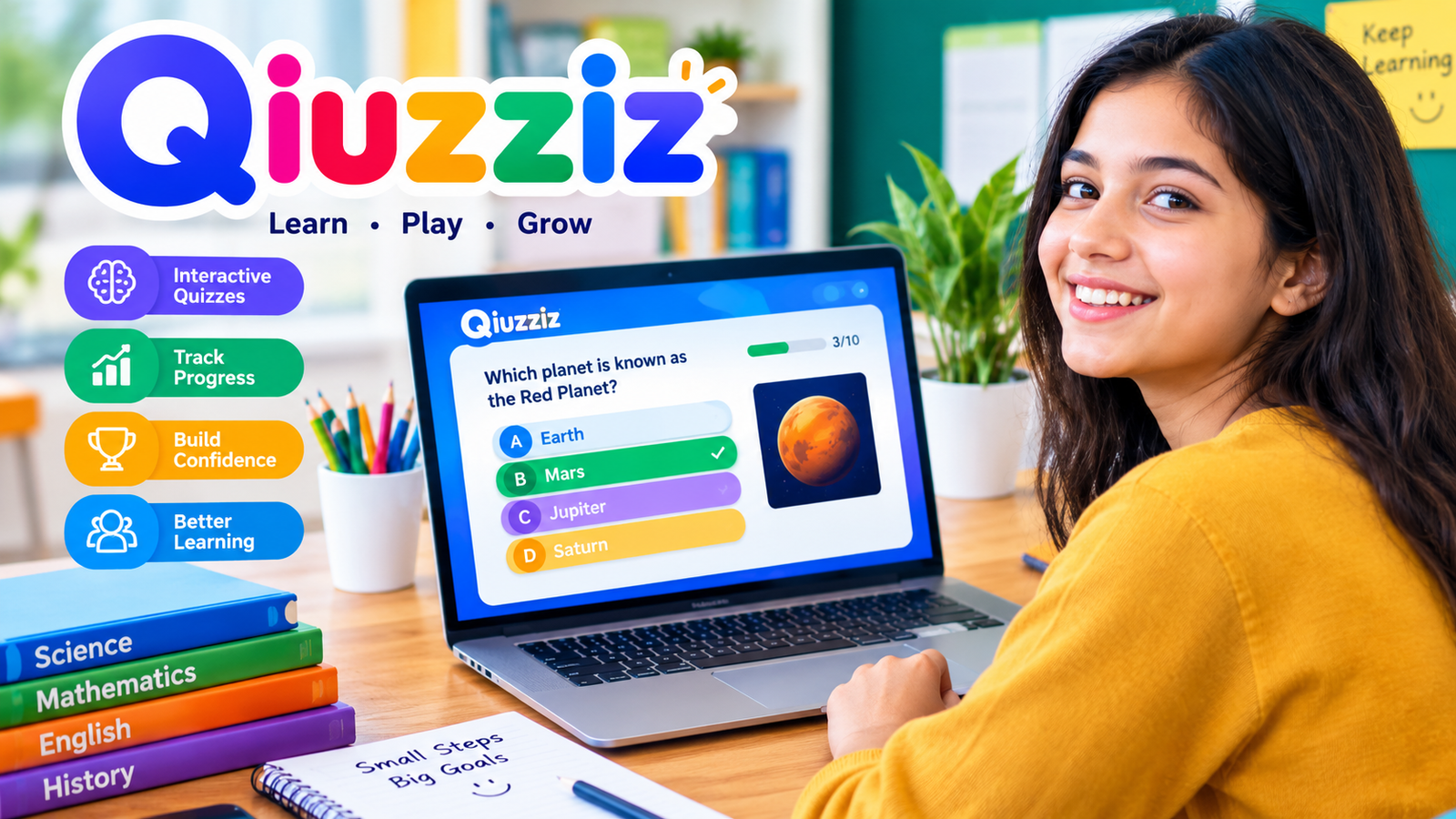
Qiuzziz: An Interactive Way to Make Learning More Engaging
Making Learning Fun, Interactive, and Engaging with Digital Quizzes

Introduction
Qiuzziz is a term commonly associated with interactive online quizzes and digital learning activities. In modern education, quizzes are no longer limited to paper worksheets or classroom tests. Digital quiz platforms can make learning more engaging by combining questions, instant feedback, visual elements, and game-like experiences.
Students often learn better when they can actively participate rather than simply read or listen. Interactive quizzes provide an opportunity to test knowledge, identify mistakes, and review important concepts in an enjoyable environment. Teachers can also use quiz-based activities to understand where students are performing well and where additional explanation may be needed.
Whether used for classroom activities, homework, revision, or informal knowledge checks, Qiuzziz represents the growing role of interactive technology in education.
What Is Qiuzziz?
Qiuzziz can be understood as a search term related to online quiz-based learning. The concept focuses on using digital questions and interactive activities to make educational assessment more engaging.
Instead of relying entirely on traditional examinations, educators can introduce short quizzes that allow learners to answer questions and receive feedback. This approach can make assessment feel less stressful while encouraging students to participate.
The exact meaning of the term may vary depending on how it is used online, but its connection with interactive quizzes makes it relevant to students, teachers, parents, and people interested in educational technology.
Why Interactive Quizzes Matter
Interactive quizzes can provide several advantages over conventional question-and-answer activities. One major benefit is immediate participation. Students have to think about an answer instead of passively consuming information.
Quizzes can also help reinforce lessons. When learners repeatedly encounter important concepts through questions, they have additional opportunities to remember and understand the material.
Another advantage is that quizzes can reveal knowledge gaps. A student may believe they understand a topic until a question exposes an area that needs further study. This makes quizzes useful not only for grading but also for learning.
How Students Can Benefit From Qiuzziz
Students can use quiz-based learning to support their everyday studies in several ways.
Quick Knowledge Testing
A short quiz can help students determine how much they remember after completing a lesson. This can be especially useful before an examination.
Immediate Feedback
Digital quizzes can provide feedback quickly. Students can identify incorrect answers and review the relevant topic while the information is still fresh.
More Engaging Revision
Repeatedly reading notes can become monotonous. Interactive questions introduce variety and encourage active recall.
Better Learning Motivation
Game-like elements, scores, challenges, and progress tracking can make learning activities feel more interesting. When used appropriately, these features may encourage students to spend more time reviewing educational material.
Learning at Different Speeds
Digital quiz activities can support students who prefer to practice independently. Learners can focus on topics where they need more improvement.
How Teachers Can Use Quiz-Based Learning
Teachers can incorporate interactive quizzes into many parts of a lesson.
A teacher might begin a class with a few questions to determine what students already know. During a lesson, short quizzes can check whether learners understand a newly introduced concept. At the end, a quiz can be used as a quick review.
Teachers can also create questions around vocabulary, mathematics, science, history, technology, and other subjects. The flexibility of digital quizzes makes them useful for different age groups and educational settings.
Qiuzziz and Classroom Engagement
One of the biggest challenges in education is maintaining students’ attention. Long lectures and repetitive assignments may not work equally well for every learner.
Interactive activities can introduce a more active learning environment. Students are encouraged to make decisions, answer questions, and learn from mistakes.
However, technology should support teaching rather than replace it. A well-designed quiz is most effective when it connects directly with lesson objectives and gives students meaningful opportunities to understand the subject.
Creating Better Online Quizzes
A good quiz is more than a collection of random questions. The questions should have a clear purpose.
Teachers should use straightforward language and avoid unnecessary complexity. Questions should test the intended learning objective rather than confuse students.
It is also useful to mix different levels of difficulty. Easier questions can build confidence, while more challenging questions encourage deeper thinking.
Visual content can sometimes make questions more engaging, particularly when the subject involves diagrams, maps, images, or practical examples.
Common Uses of Qiuzziz-Style Activities
Interactive quiz activities can be used in many situations, including:
- Classroom revision
- Homework practice
- Exam preparation
- Vocabulary learning
- Subject assessments
- Training sessions
- Educational games
- Knowledge competitions
- Icebreaker activities
- Self-study
This flexibility is one reason digital quiz-based learning continues to attract interest.
The Role of Technology in Modern Education
Education technology has changed how teachers deliver lessons and how students practice information. Computers, tablets, smartphones, and online platforms provide new opportunities for interactive learning.
Quiz systems are particularly accessible because they are relatively simple to understand. Students do not necessarily need advanced technical skills to answer questions.
For teachers, digital platforms can reduce some of the effort involved in organizing basic assessments. Instead of manually checking every response, automated systems may help provide results more efficiently.
Challenges to Consider
Despite their benefits, online quizzes also have limitations.
Students need access to a suitable device and a reliable internet connection when quizzes are hosted online. Technical problems can interrupt an activity and create frustration.
Another concern is overusing quizzes. Not every learning objective can be measured effectively through multiple-choice or short-answer questions. Subjects requiring creativity, practical skills, long-form reasoning, or detailed explanations may need other forms of assessment.
Privacy and responsible technology use are also important. Schools and educators should choose digital learning tools carefully and understand how student information is handled.
Tips for Students
Students can get more value from interactive quizzes by treating mistakes as learning opportunities.
Instead of focusing only on the final score, learners should review incorrect answers and determine why they made an error. Keeping a list of difficult concepts can also make future revision more focused.
Short and regular practice sessions are often easier to maintain than attempting a large amount of revision at once.
The Future of Interactive Learning
The future of digital education is likely to include increasingly personalized learning experiences. Artificial intelligence, adaptive assessments, multimedia lessons, and real-time feedback may allow educational platforms to respond more closely to individual learning needs.
Quiz-based systems can play an important role in this development. When combined with quality teaching and appropriate assessment methods, interactive quizzes can help create a more active and responsive learning environment.
Conclusion
Qiuzziz reflects the growing interest in interactive quiz-based learning and the wider movement toward technology-supported education. Digital quizzes can make revision more engaging, provide quick feedback, and help students recognize areas that require additional practice.
For teachers, quiz activities can provide a convenient way to review lessons and encourage classroom participation. For students, they can turn repetitive revision into a more active learning experience.
The most effective approach is to use interactive quizzes as one part of a broader learning strategy. When thoughtful questions, good teaching, feedback, and technology work together, digital assessment can become a useful tool for improving the learning experience.
FAQs
What is Qiuzziz?
Qiuzziz is a term associated with interactive online quiz-based learning and digital educational activities.
Who can use quiz-based learning?
Students, teachers, trainers, and independent learners can all benefit from interactive quizzes.
Are online quizzes useful for revision?
Yes, quizzes can help students test their memory, identify mistakes, and review important topics.
Can teachers use interactive quizzes in classrooms?
Yes, teachers can use digital quizzes for lesson reviews, knowledge checks, homework, and assessments.
Do quizzes improve student engagement?
Interactive questions can encourage active participation and make some learning activities more enjoyable.
Are digital quizzes suitable for every subject?
They are useful for many subjects, but some skills require additional methods such as projects, written work, presentations, or practical assessments.
What makes a good educational quiz?
Clear questions, appropriate difficulty, relevant content, useful feedback, and alignment with learning objectives are important features.
What is the future of digital quizzes?
Digital quizzes are likely to become more personalized through technologies such as adaptive learning and artificial intelligence.