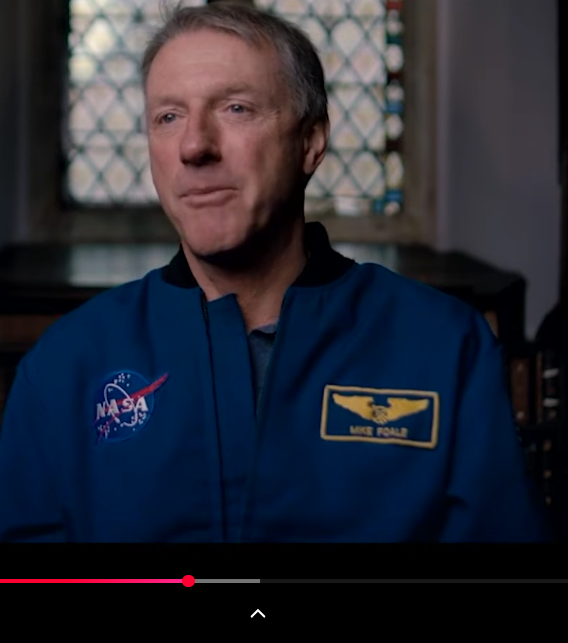
Michael Foale: Remarkable Space Journey Through Triumphs and Challenges
British-American Astrophysicist Who Conquered Mir, ISS, and Spaceflight Challenges

Michael Foale is a British-American astrophysicist and former NASA astronaut whose extraordinary career connected scientific research with some of the most challenging missions in human spaceflight. Born in Louth, England, on January 6, 1957, Foale developed a strong interest in science, aviation, exploration, and space before building an impressive career at NASA.
Table of Contents
ToggleOver more than three decades associated with NASA, Foale became one of the most experienced astronauts of his generation. He flew six space missions, spent more than a year in space, worked aboard both the Russian Mir space station and the International Space Station, and commanded Expedition 8. His career also included difficult moments, particularly the 1997 Mir collision, which tested the crew’s ability to respond calmly and effectively to a serious emergency.
Quick Bio
| Detail | Information |
|---|---|
| Full Name | C. Michael Foale |
| Common Name | Michael Foale |
| Born | January 6, 1957 |
| Birthplace | Louth, England |
| Hometown | Cambridge, England |
| Nationality | British-American |
| Profession | Astrophysicist, Former NASA Astronaut |
| Education | University of Cambridge |
| Doctorate | Laboratory Astrophysics |
| NASA Selection | 1987 |
| Space Missions | 6 |
| Total Time in Space | About 375 days |
| ISS Role | Expedition 8 Commander |
| Major Space Stations | Mir and ISS |
| Spacewalks | 4 |
| Honor | Commander of the Order of the British Empire (CBE) |
| Wife | Rhonda R. Butler |
| Children | Two |
Early Life and Family Background
Michael Foale was born in Louth, England, to Colin and Mary Foale. His father was British and his mother was American, giving Foale a British-American family background. He grew up in the Cambridge area and has identified Cambridge as his hometown.
From an early age, Foale developed interests that later became important throughout his professional life. Science, aviation, exploration, and technology were among his major interests, while his later university years gave him opportunities to combine scientific study with challenging practical activities.
Education and Scientific Training
Foale attended The King’s School, Canterbury, where he completed his schooling in 1975. He then entered Queens’ College at the University of Cambridge and studied physics through the Natural Sciences Tripos.
In 1978, Foale earned a first-class degree in physics. He continued his academic career at Cambridge and completed a doctorate in Laboratory Astrophysics in 1982. His scientific education gave him a strong foundation for the technical demands of astronaut training and spaceflight.
During his Cambridge years, Foale also participated in scientific scuba-diving activities. His experience with underwater scientific work demonstrated his willingness to operate in demanding environments while combining exploration with technical research.
Career Before NASA
After completing his doctorate, Foale moved toward the American aerospace industry. He worked for McDonnell Douglas Aircraft Corporation in Houston, where he was involved with Space Shuttle navigation problems.
In June 1983, he joined NASA’s Johnson Space Center. Before becoming an astronaut, he worked in Mission Control as a payload officer and supported several Space Shuttle missions. This experience gave him direct knowledge of spacecraft operations and mission control procedures.
Foale was selected as a NASA astronaut candidate in 1987. His technical background, operational experience, and scientific education helped prepare him for the demanding astronaut training program.
Michael Foale’s Spaceflight Career
STS-45: First Space Mission
Foale made his spaceflight debut aboard Space Shuttle Atlantis on STS-45, launched in March 1992. The mission was part of NASA’s ATLAS program and focused on studying Earth’s atmosphere and its relationship with solar activity.
The mission marked the beginning of a remarkable spaceflight career. Foale’s scientific background was particularly valuable for missions involving atmospheric and solar research.
STS-56
His second mission was STS-56, which launched aboard Space Shuttle Discovery in April 1993. The mission carried the ATLAS-2 scientific payload and the SPARTAN satellite.
SPARTAN was used to study the solar corona. The mission further strengthened Foale’s experience with scientific spacecraft operations and space-based research.
STS-63 and the Mir Rendezvous
Foale’s third Shuttle mission, STS-63, launched in February 1995. The mission included a rendezvous with the Russian Mir space station and represented an important stage in growing American-Russian cooperation in human spaceflight.
During STS-63, Foale completed his first spacewalk with astronaut Bernard Harris. The experience provided valuable preparation for the much longer and more demanding missions that followed.
The Historic Mir Mission
One of the defining chapters of Michael Foale’s career came in 1997. He launched aboard Space Shuttle Atlantis on STS-84 in May and transferred to the Russian Mir space station.
Foale spent an extended period aboard Mir during a period of close international cooperation. The mission became particularly significant after a serious accident occurred on June 25, 1997, when a Progress cargo spacecraft collided with the station during a docking exercise.
The collision damaged the Spektr module and caused a rapid depressurization. The station also began rotating uncontrollably. Foale and his crewmates responded to the emergency and worked to stabilize the spacecraft and protect the remaining station systems.
Foale later participated in a spacewalk with Russian cosmonaut Anatoly Solovyev to inspect the damaged area. His experience during the Mir emergency became an important part of his professional legacy and demonstrated the demanding realities of long-duration spaceflight.
STS-103 and Hubble Servicing
Foale returned to space in December 1999 aboard STS-103, a Space Shuttle mission dedicated to servicing the Hubble Space Telescope.
During the mission, Foale participated in a lengthy spacewalk with Claude Nicollier. The astronauts performed important repair and maintenance work on Hubble, helping restore and improve the observatory’s operational capabilities.
The mission added another major scientific achievement to Foale’s career and demonstrated his ability to perform complex technical work outside a spacecraft.
Expedition 8 Commander
Foale’s sixth and final space mission began in October 2003. He traveled to the International Space Station aboard Soyuz TMA-3 with Russian cosmonaut Alexander Kaleri.
Foale served as commander of Expedition 8, spending approximately six months aboard the ISS. His previous experience on Mir proved valuable because the mission required international teamwork, technical discipline, and long-duration operations.
During Expedition 8, Foale also completed another spacewalk. His ISS mission brought his total spaceflight experience to approximately 375 days.
Michael Foale Career Timeline
| Year | Career Event |
|---|---|
| 1957 | Born in Louth, England |
| 1975 | Graduated from The King’s School, Canterbury |
| 1978 | Earned first-class physics degree at Cambridge |
| 1982 | Completed doctorate in Laboratory Astrophysics |
| 1983 | Joined NASA Johnson Space Center |
| 1987 | Selected as NASA astronaut |
| 1992 | Flew first mission, STS-45 |
| 1993 | Flew STS-56 |
| 1995 | Flew STS-63 and completed first spacewalk |
| 1997 | Completed long-duration Mir mission |
| 1999 | Participated in Hubble servicing mission STS-103 |
| 2003 | Began ISS Expedition 8 |
| 2004 | Completed Expedition 8 |
| 2005 | Received CBE |
| 2013 | Retired from NASA |
Awards and Achievements
Foale’s accomplishments have earned significant recognition. In 2005, he was appointed a Commander of the Order of the British Empire (CBE).
He has also been recognized professionally as a Fellow of the Royal Aeronautical Society and a Fellow of the Institute of Physics. His six space missions, four spacewalks, and more than 375 days in space represent the central achievements of his astronaut career.
Personal Life, Hobbies, and Interests
Michael Foale is married to Rhonda R. Butler, and they have two children. His personal interests have included aviation, soaring, windsurfing, hiking, cross-country skiing, software writing, and scientific diving.
His interests outside astronautics reflect the same combination of science, exploration, technology, and physical activity that characterized his professional career. He has also continued to participate in educational and public discussions about space exploration, leadership, teamwork, and future human missions.
Life After NASA
Foale retired from NASA in 2013 after approximately 30 years with the agency. At the time of his retirement, NASA highlighted his six space missions, extensive time in space, leadership experience, and work aboard both Mir and the ISS.
After leaving NASA, Foale continued his interest in aerospace and green aviation technology. He has also remained involved in educational and public-speaking activities, sharing lessons from his astronaut career and experiences in space.
Michael Foale’s Legacy
Michael Foale’s career represents an important chapter in modern human spaceflight. He experienced the Space Shuttle era, participated in U.S.-Russian cooperation aboard Mir, helped service the Hubble Space Telescope, and commanded an International Space Station expedition.
His career was not without serious challenges. The Mir collision presented a dangerous situation, but the response demonstrated the importance of preparation, communication, teamwork, and technical decision-making. Foale’s journey from physics student at Cambridge to experienced astronaut and ISS commander remains an inspiring example of how scientific knowledge and perseverance can lead to extraordinary achievements.
Conclusion
Michael Foale stands among the notable astronauts whose careers helped connect scientific research, international cooperation, and human exploration. As a British-American astrophysicist, he brought a strong scientific background to six space missions and accumulated approximately 375 days in orbit.
From his early education at Cambridge to his NASA career, Mir experience, Hubble servicing mission, and command of ISS Expedition 8, Foale built a legacy based on exploration, science, technical expertise, and teamwork. His story continues to offer valuable lessons about preparation and resilience in some of the most demanding environments humans have ever entered.
FAQ
1. Who is Michael Foale?
Michael Foale is a British-American astrophysicist and former NASA astronaut who flew six space missions.
2. When and where was Michael Foale born?
Michael Foale was born on January 6, 1957, in Louth, England.
3. Where did Michael Foale study?
He studied physics at the University of Cambridge and later earned a doctorate in Laboratory Astrophysics.
4. Who are Michael Foale’s parents?
His parents are Colin Foale and Mary Foale.
5. Is Michael Foale married?
Yes, Michael Foale is married to Rhonda R. Butler.
6. How many children does Michael Foale have?
Michael Foale and his wife have two children.
7. How many times did Michael Foale travel into space?
He completed six space missions during his NASA career.
8. What was Michael Foale’s most notable leadership role?
He served as commander of International Space Station Expedition 8.
9. How long did Michael Foale spend in space?
He accumulated approximately 375 days in space across six missions.
10. When did Michael Foale retire from NASA?
He retired from NASA in 2013 after approximately 30 years with the agency.