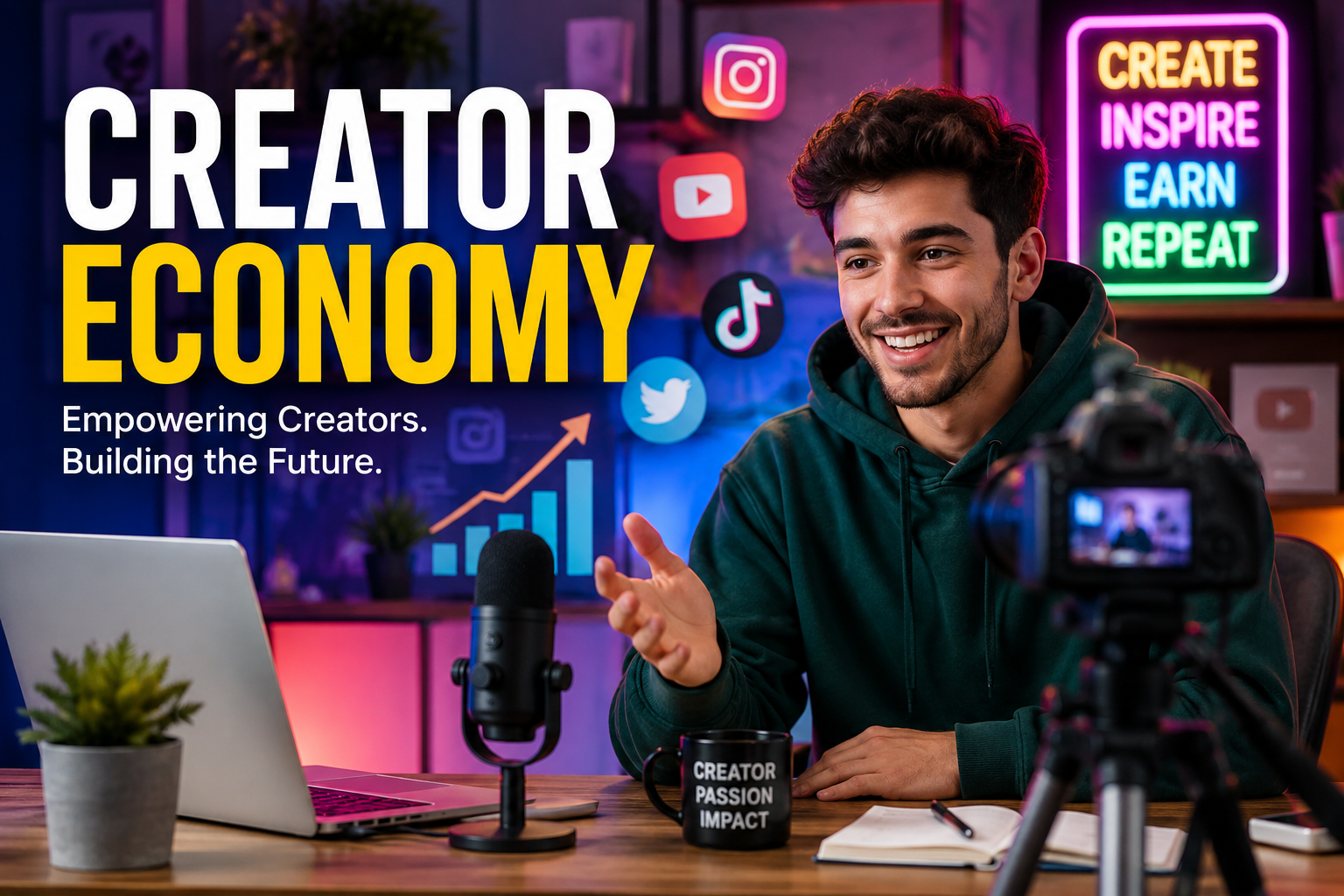
Creator Economy: How Digital Creators Are Building New Careers
Creator Economy: How Digital Creators Turn Creativity Into Thriving Online Businesses

Introduction
The Creator Economy has become one of the most important developments in the modern digital world. Instead of depending entirely on traditional jobs, creators can now build businesses around their skills, knowledge, personality, creativity, and online communities. Social media platforms, video-sharing websites, newsletters, podcasts, blogs, online courses, and digital products have made it easier for individuals to turn their ideas into income.
Table of Contents
ToggleFrom content creators and influencers to independent educators, artists, writers, gamers, and entrepreneurs, millions of people participate in this growing digital ecosystem. The Creator Economy is changing how people work, communicate with audiences, market products, and build personal brands.
What Is the Creator Economy?
The Creator Economy refers to the ecosystem of independent individuals who create and distribute content or digital products and earn money from their audiences, skills, or creative work.
Creators may publish videos, photographs, articles, podcasts, tutorials, livestreams, newsletters, music, courses, or other digital content. They can generate income through advertising, sponsorships, subscriptions, memberships, affiliate marketing, merchandise, consulting, digital products, and direct sales.
The most important feature of this economy is the direct relationship between creators and their audiences. A creator does not necessarily need a traditional media company or large organization to reach thousands or millions of people.
Why Is the Creator Economy Growing?
Several factors have contributed to the rapid growth of the Creator Economy.
Easy Access to Digital Platforms
Creating content no longer requires expensive equipment or a professional studio. A smartphone, internet connection, and basic editing tools can be enough to begin publishing content.
Global Audiences
The internet allows creators to reach audiences beyond their local communities. Someone creating educational content in one country can attract viewers, readers, or customers from around the world.
Multiple Income Opportunities
Creators can diversify their income instead of relying on a single source. A content creator might combine advertising revenue with sponsorships, affiliate links, paid memberships, courses, and digital products.
Growth of Personal Brands
Consumers increasingly connect with individuals they trust. A strong personal brand can help a creator develop a loyal community and create commercial opportunities.
Major Types of Creators
The Creator Economy includes many different types of professionals.
Influencers
Influencers use social platforms to build communities around lifestyle, fashion, travel, fitness, technology, entertainment, or other interests. Brands may pay them to promote products or services.
Video Creators
Video creators produce educational videos, entertainment, reviews, tutorials, interviews, documentaries, and other formats. Video remains one of the strongest forms of online content.
Bloggers and Writers
Writers can build audiences through websites, newsletters, online publications, and social media. Their income may come from advertising, sponsorships, subscriptions, affiliate marketing, or paid services.
Podcasters
Podcasters create audio programs covering subjects such as business, news, education, culture, technology, and entertainment. Successful podcasts can attract sponsorships and loyal subscribers.
Educators and Course Creators
Teachers, experts, and professionals can monetize their knowledge through online courses, workshops, coaching, ebooks, and educational communities.
Artists and Designers
Graphic designers, photographers, illustrators, musicians, and other artists can sell creative services and digital products directly to customers.
How Creators Make Money
One of the biggest attractions of the Creator Economy is the variety of monetization models.
Advertising
Platforms may share advertising revenue with eligible creators. The amount earned depends on factors such as audience size, engagement, content category, and location.
Brand Sponsorships
Companies collaborate with creators who have audiences that match their target customers. Sponsorships can become a major source of revenue for established creators.
Affiliate Marketing
Creators recommend products or services and receive commissions when their audience makes qualifying purchases through their affiliate links.
Memberships and Subscriptions
Some creators offer exclusive content, communities, newsletters, or other benefits in exchange for recurring payments.
Digital Products
Creators can sell ebooks, templates, courses, presets, guides, software, artwork, and other downloadable products.
Services
A creator can use their audience to attract clients for consulting, coaching, design, writing, marketing, photography, or other professional services.
The Importance of Personal Branding
Personal branding plays a major role in the Creator Economy. A creator’s identity, expertise, communication style, and values can become part of the business.
A strong personal brand does not necessarily require millions of followers. A smaller audience with high trust and strong engagement can sometimes be more valuable than a large audience that rarely interacts with the creator.
Creators can strengthen their brands by maintaining consistent topics, visual identity, communication, and publishing habits.
Challenges in the Creator Economy
Although the Creator Economy offers exciting opportunities, it also has challenges.
Unstable Income
Creator income can fluctuate significantly. Advertising rates, sponsorships, audience engagement, and platform algorithms can change.
Platform Dependence
Creators who rely heavily on one platform may face problems if algorithms, policies, monetization rules, or reach change.
High Competition
Millions of people publish content online. Standing out requires originality, consistency, useful information, and a strong understanding of an audience.
Burnout
Producing content continuously can become stressful. Creators may feel pressure to publish frequently, respond to audiences, follow trends, and maintain their online presence.
Changing Algorithms
Social media platforms regularly change how content is distributed. A creator who previously received significant organic reach may experience lower visibility after an algorithm change.
How to Build a Career in the Creator Economy
Building a sustainable creator career requires more than simply posting content.
First, creators should choose a clear niche or subject area. A focused topic makes it easier to understand the target audience and develop relevant content.
Second, creators should prioritize quality and usefulness. Content that solves problems, teaches something valuable, entertains viewers, or provides a unique perspective has a greater chance of attracting loyal followers.
Third, consistency is essential. Regular publishing helps creators develop relationships with their audiences and improve their skills over time.
Creators should also avoid depending completely on one platform. Building an email list, website, community, or other direct audience channel can provide greater long-term stability.
Finally, creators should experiment with different monetization methods. Depending on the niche, sponsorships, affiliate marketing, memberships, products, and services can all contribute to a sustainable business.
The Future of the Creator Economy
The Creator Economy is likely to continue evolving as technology becomes more accessible. Artificial intelligence, improved editing tools, livestreaming, digital communities, virtual experiences, and new monetization systems are creating additional opportunities.
At the same time, audiences are becoming more selective. Authenticity, expertise, trust, and originality are increasingly important. Creators who understand their communities and provide genuine value may have stronger long-term prospects.
The future may also involve more creators operating like small businesses. Instead of simply producing content, they may manage multiple revenue streams, develop products, hire teams, and build independent brands.
Conclusion
The Creator Economy has changed the traditional idea of how people can build careers and businesses. Individuals can now use digital platforms to share their creativity, develop communities, establish personal brands, and generate income without relying entirely on traditional organizations.
Success is not guaranteed, and the industry has challenges such as competition, changing algorithms, and unpredictable revenue. However, creators who focus on valuable content, strong relationships, consistent publishing, and diversified income can build more sustainable opportunities.
As digital technology continues to develop, the Creator Economy will remain an important part of the modern internet and the future of independent work.